Context
Legal teams needed a signed-in workspace to store documents, convert office files, and ask questions against the corpus without a loose chat window.
AI & Agentic Systems
A legal document workspace for ingest, conversion, and model-backed review.
Software build · Legal Document Intelligence · Next.js + Express + Supabase + object storage
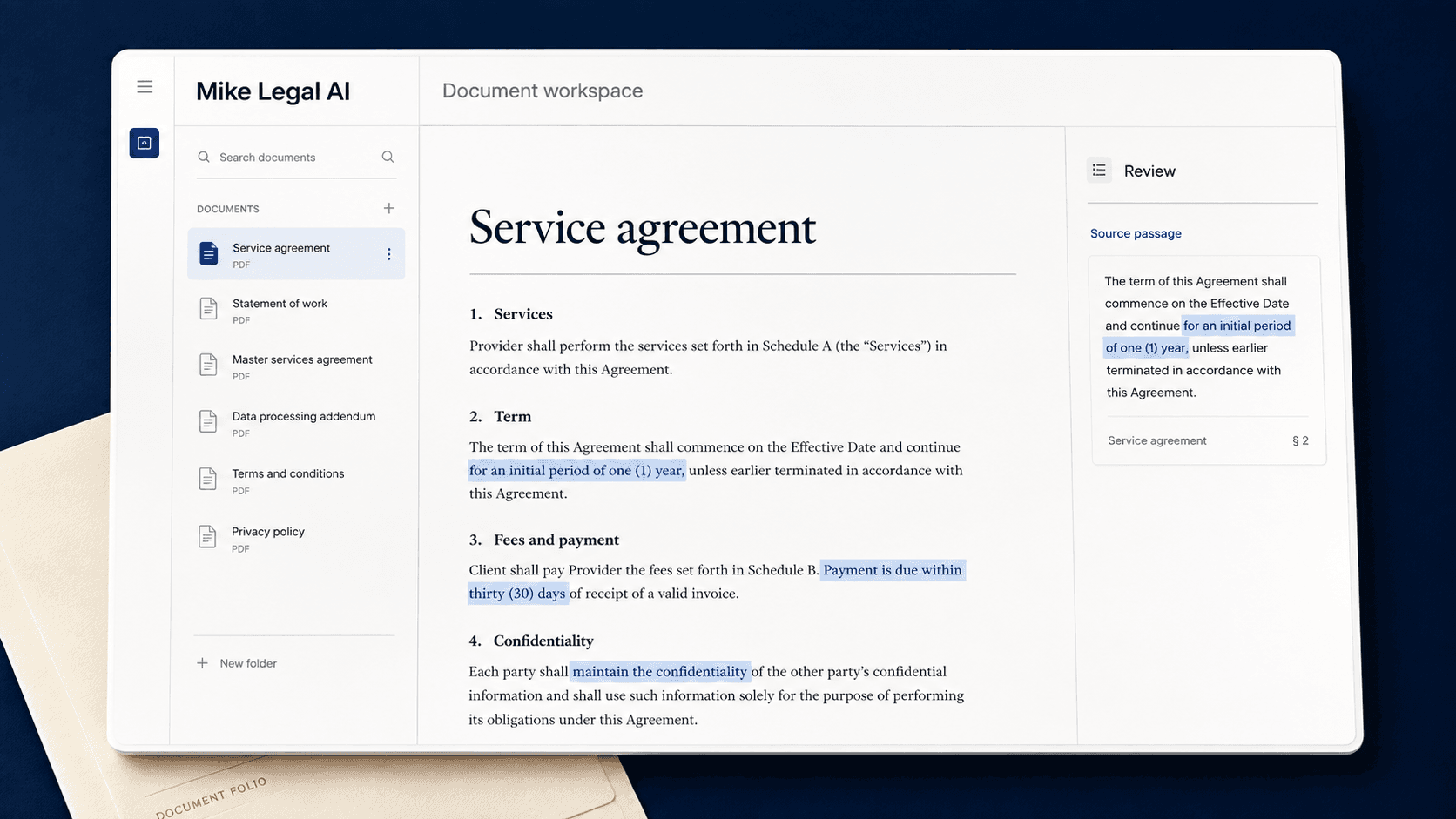
Project illustration. Not a verified production screenshot.
Engagement: Software build. The case study documents the implementation scope. Live deployment status and usage are not asserted.
The capabilities below describe the work delivered. Quantified business results have not been published.
Context
Legal teams needed a signed-in workspace to store documents, convert office files, and ask questions against the corpus without a loose chat window.
Challenge
Document intelligence fails when auth, storage, conversion, and model access are separate. Office files also need a reliable path into a reviewable PDF.
Solution
The implementation combines a Next.js frontend, an Express API, Supabase auth and Postgres, S3-compatible storage, LibreOffice conversion, and pluggable model providers.
Inside the project
Logical components and integration boundaries. This diagram is not a deployment or compliance certification.
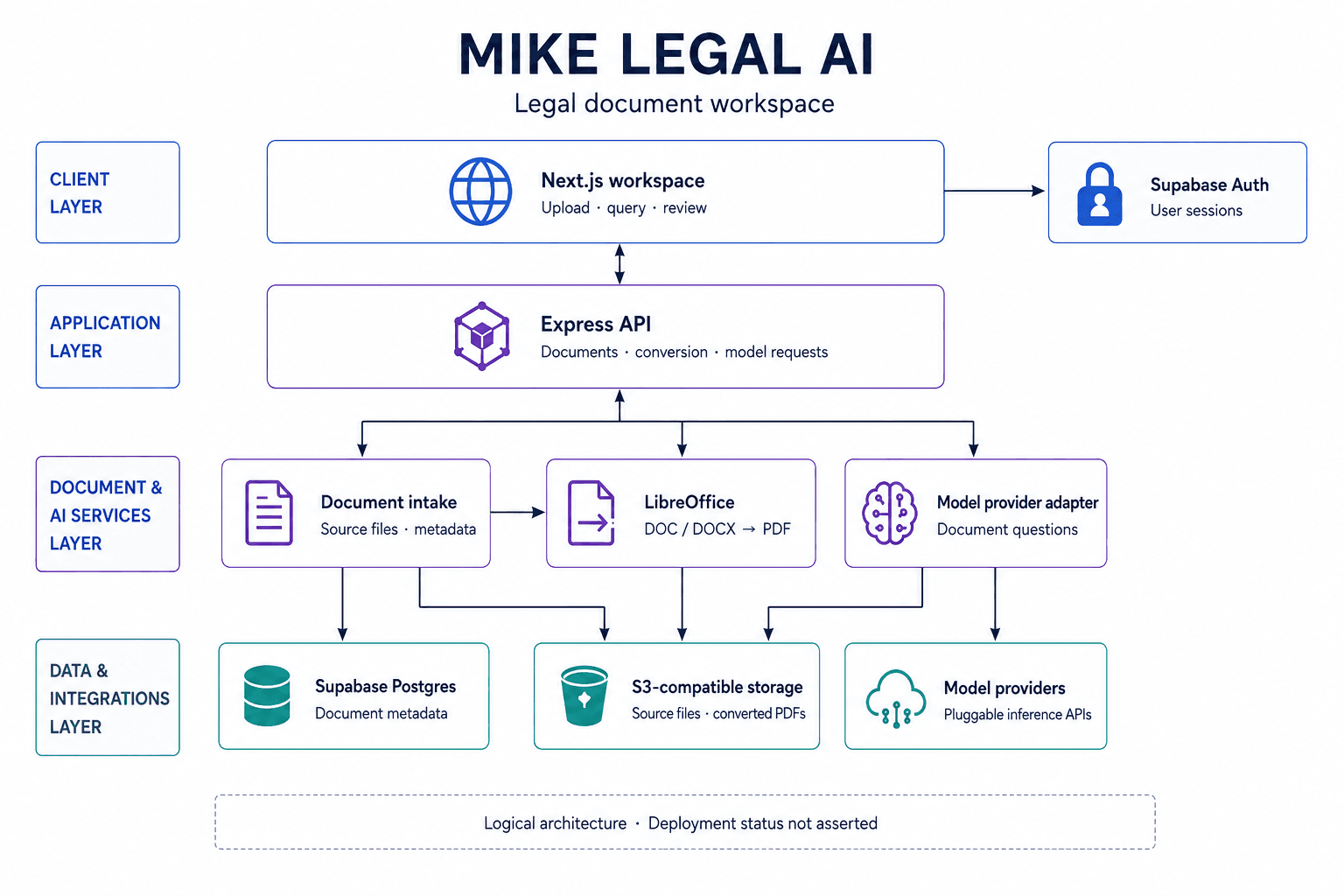
The Next.js workspace uses Supabase authentication and an Express API. Document intake stores metadata in Supabase Postgres and source files in S3-compatible storage. LibreOffice converts office documents to PDF. A model-provider adapter connects document questions to pluggable inference APIs. These are logical responsibilities within the application, not a claim of independent microservices.
Authenticated document workspace
Office-to-PDF conversion
Object storage for source files
Model-backed query interface
Documents live in one authenticated product instead of shared drives.
Office files can be converted and reviewed in a consistent format.
Teams can query the corpus without leaving the workspace.
Storage and model providers can be swapped without rewriting the app.
Organized the workspace around authenticated document access.
Connected metadata and object storage through the API.
Added office-file conversion and model-provider adapters.
Documented setup and configuration for the frontend and backend.
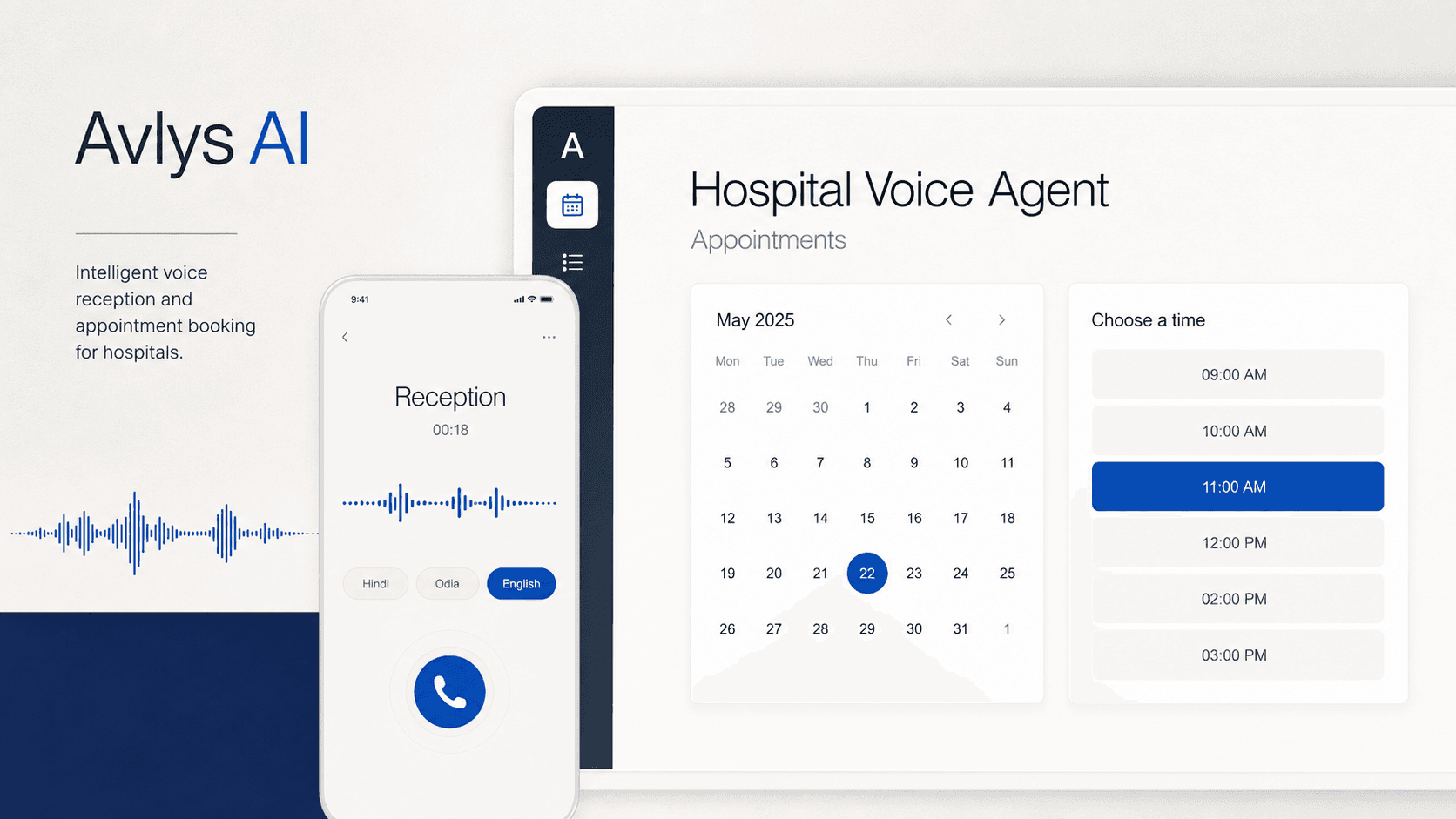
A trilingual hospital receptionist that books appointments from inbound calls.
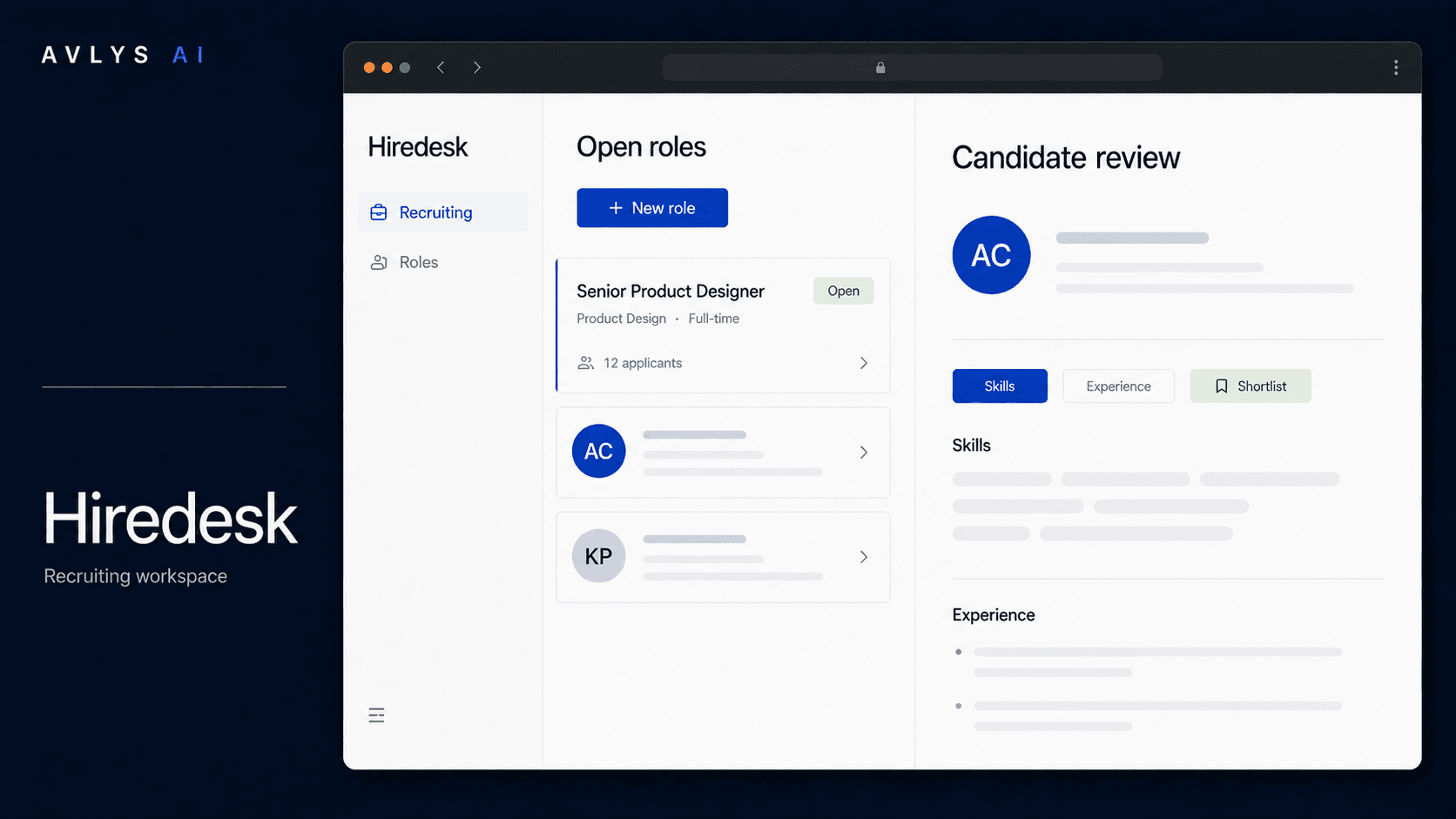
A recruiting match desk that parses resumes, ingests jobs, and ranks fit.
A tender desk that checks contractor eligibility before a bid is assembled.
30 minutes, engineers on the call, no deck. We’ll map your workflow and tell you honestly whether AI pays back - and what a fixed-price pilot would look like.
Tell us about the project
Request a call or share your requirements. We reply within one business day.